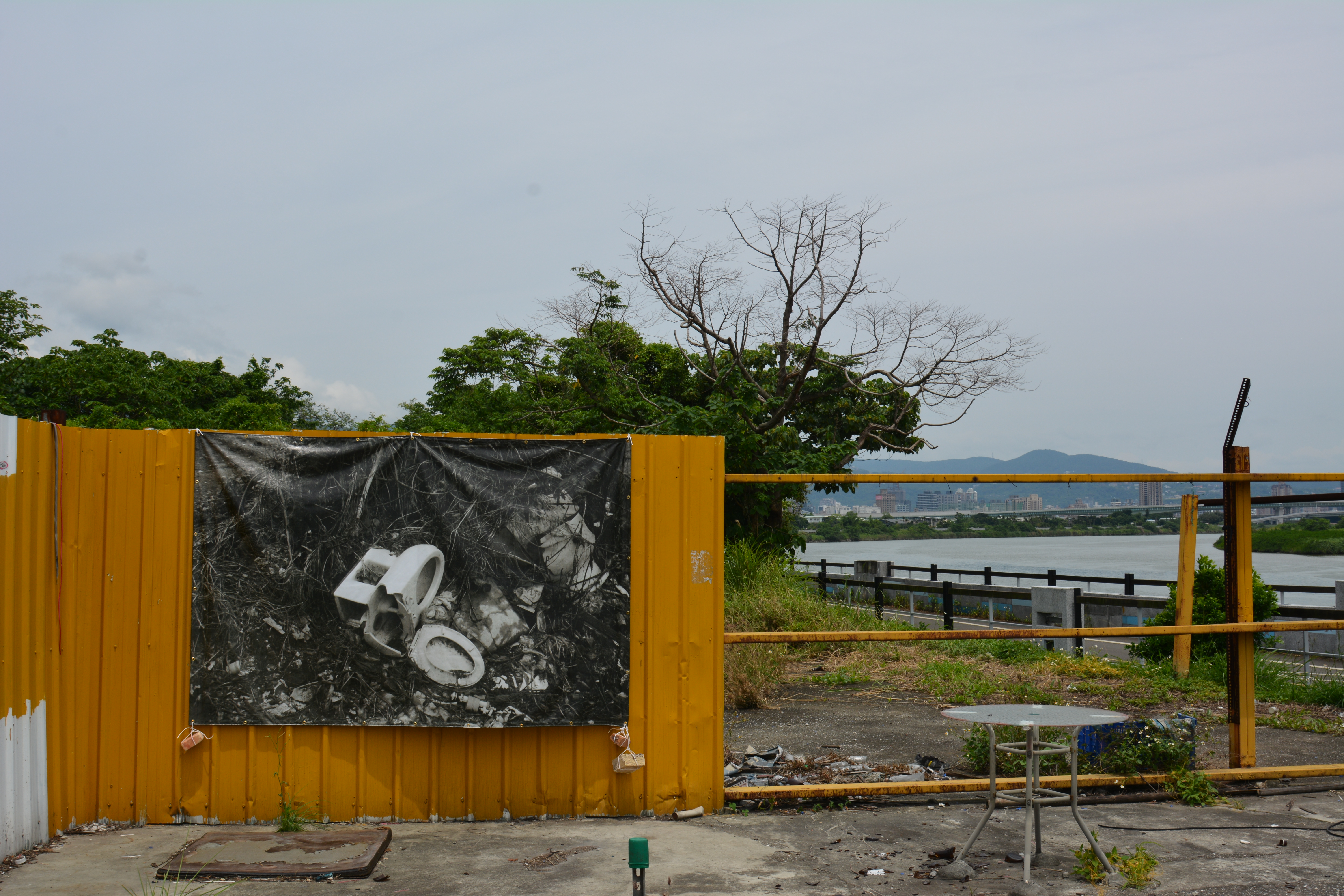
Take Me With You
2017
Four 150 cm X 225 cm
Inkject print on Canvas
2017
Four 150 cm X 225 cm
Inkject print on Canvas
In this work, I took four photographs of the Guandu Plains and printed them onto large canvases. I installed each canvas in the place where the image had been shot. The gesture doubled the landscape: plains looking back at themselves, suspended between document and presence. Returning the image to site was a means to pay attention to the rhythms of this land, its material surface, and the multiple labors that work it every day.
The decision to use this material was suggested by the community. It is common for farmers in the region to use this same printed canvas (usually surplus ones left after the election season) to patch houses, cover tools, and build provisional shelters. By using this familiar medium, I wanted to align the work with some of the improvisational and infrastructural ways in which the plains is inhabited. At the end of the exhibition, the canvases could be taken back by local residents and used for any other purpose, allowing the work to slip back into the landscape instead of remaining a self-contained art object.
In this way, the project is not only representational, but also an insertion. By designing the installation as something that could be reabsorbed into its environment, it is in principle exposed to the same forces as everything in the plains: weather, labor, entropy, improvisation. The photographs return to the community as another kind of material, and in this process, the distinction between art and infrastructure begins to blur, as images, spaces, and human practices act upon each other in an ongoing way.
The decision to use this material was suggested by the community. It is common for farmers in the region to use this same printed canvas (usually surplus ones left after the election season) to patch houses, cover tools, and build provisional shelters. By using this familiar medium, I wanted to align the work with some of the improvisational and infrastructural ways in which the plains is inhabited. At the end of the exhibition, the canvases could be taken back by local residents and used for any other purpose, allowing the work to slip back into the landscape instead of remaining a self-contained art object.
In this way, the project is not only representational, but also an insertion. By designing the installation as something that could be reabsorbed into its environment, it is in principle exposed to the same forces as everything in the plains: weather, labor, entropy, improvisation. The photographs return to the community as another kind of material, and in this process, the distinction between art and infrastructure begins to blur, as images, spaces, and human practices act upon each other in an ongoing way.